
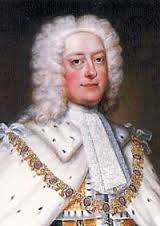
Key Events
| 1727 | George II succeeds his father, George I. |
| 1729 | Charles Wesley founds the Methodists at Lincoln College Oxford. |
| 1732 | A royal charter is granted for the founding of Georgia in America. |
| 1732 | Lord Frederick North born |
| 1734 | Jethro Tull publishes essays on improving farming including the use of the seed drill. |
| 1736 | Witchcraft is abolished as a crime. |
| 1737 | Death of George’s wife, Queen Caroline. |
| 1738 | John and Charles Wesley start the Methodist movement in Britain. |
| 1739 | Dick Turpin, highwayman, hanged at York |
| 1739 | Britain goes to war with Spain over Captain Jenkins’ ear, claimed to have been cut off in a skirmish at sea. |
| 1740 | The War of Austrian Succession breaks out in Europe. |
| 1742 | Walpole resigns as Prime Minister. |
| 1743 | George leads troops into battle at Dettingen in Bavaria, the last British monarch to do so. |
| 1745 | Charles Edward Stuart, ‘Bonnie Prince Charlie’, lands in Scotland and raises his flag for the restoration of the Stuarts. 2,000 Jacobites enter Edinburgh. Scottish victory at Prestonpans. Charles and his Jacobite army march South into England and reach Derby before turning back. |
| 1746 | Scots defeated at the Battle of Culloden. Duke of Cumberland, the King’s 2nd son, ruthlessly represses the rebels and Scottish traditions. |
| 1748 | Treaty of Aix-la-Chapelle ends the war of Austrian Succession |
| 1751 | Death of Frederick, Prince of Wales. His son, George, becomes heir to the throne. |
| 1752 | Britain adopts the Georgian Calendar. 1st January replaces 25 March as the first day of the year. |
| 1757 | Britain declares war against France. Start of the Seven Years’ War. |
| 1757 | Robert Clive wins the Battle of Plassey and secures the Indian province of Bengal for Britain. |
| 1757 | William Pitt becomes Prime Minister |
| 1759 | Wolfe captures Quebec from the French and establishes British supremacy in Canada. |
| 1759 | First botanical gardens laid out at Kew |
| 1760 | George II dies at the age of 76. |

1727 Coronation Medal
Eimer 510
Coins
YOUNG HEAD

1727 Shilling Plumes (for sale)
S. 3697 Bull 1694 ESC 1189 (scarce)
Slabbed and graded LCGS 50 (GVF)

1728 Shilling Plain Angles (sold)
S. 3699 Bull 1698 ESC 1191 (R2)

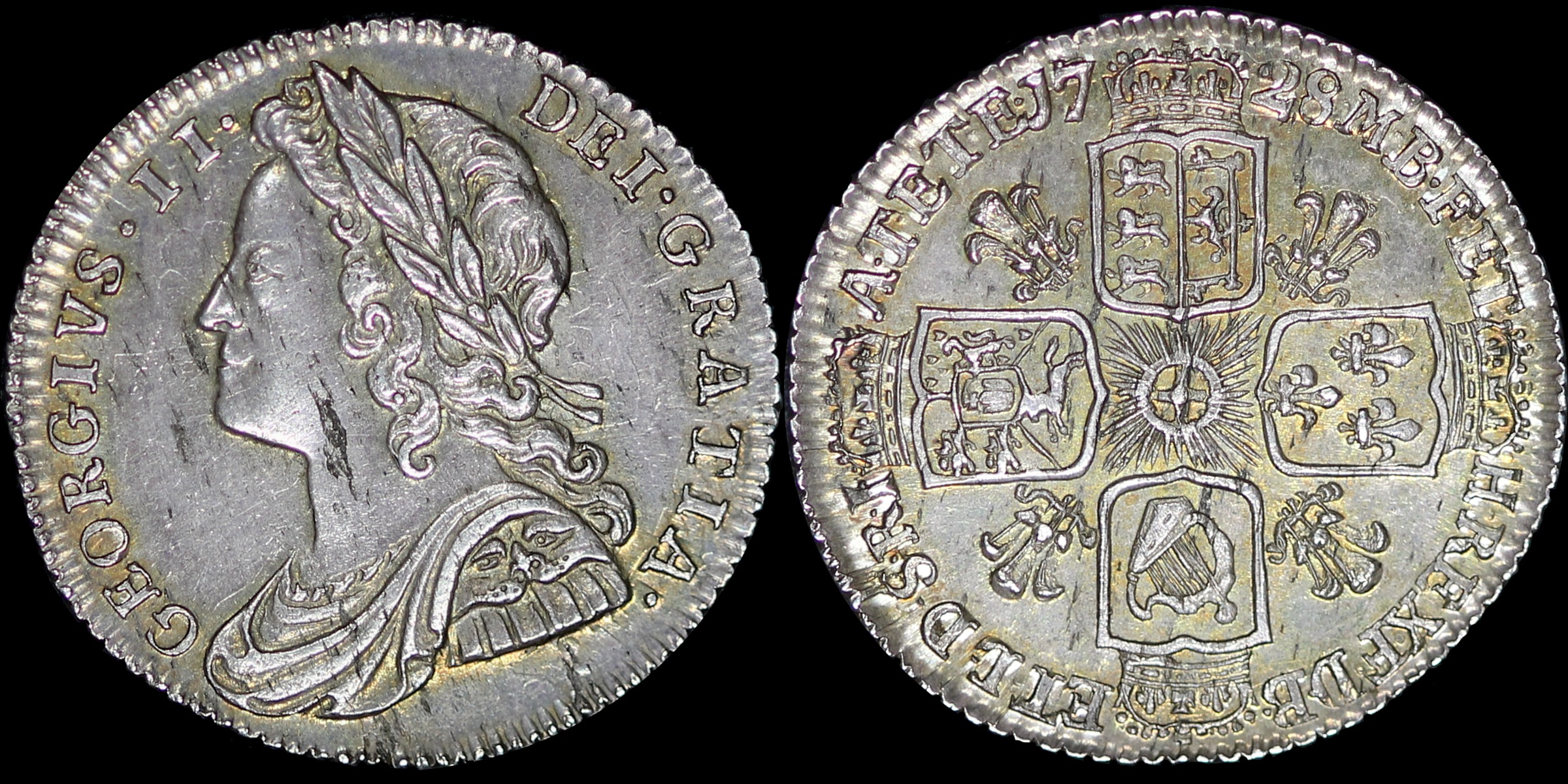
1728 Sixpence Plumes (sold)
S. 3706 Bull 1694 ESC 1189 (scarce)

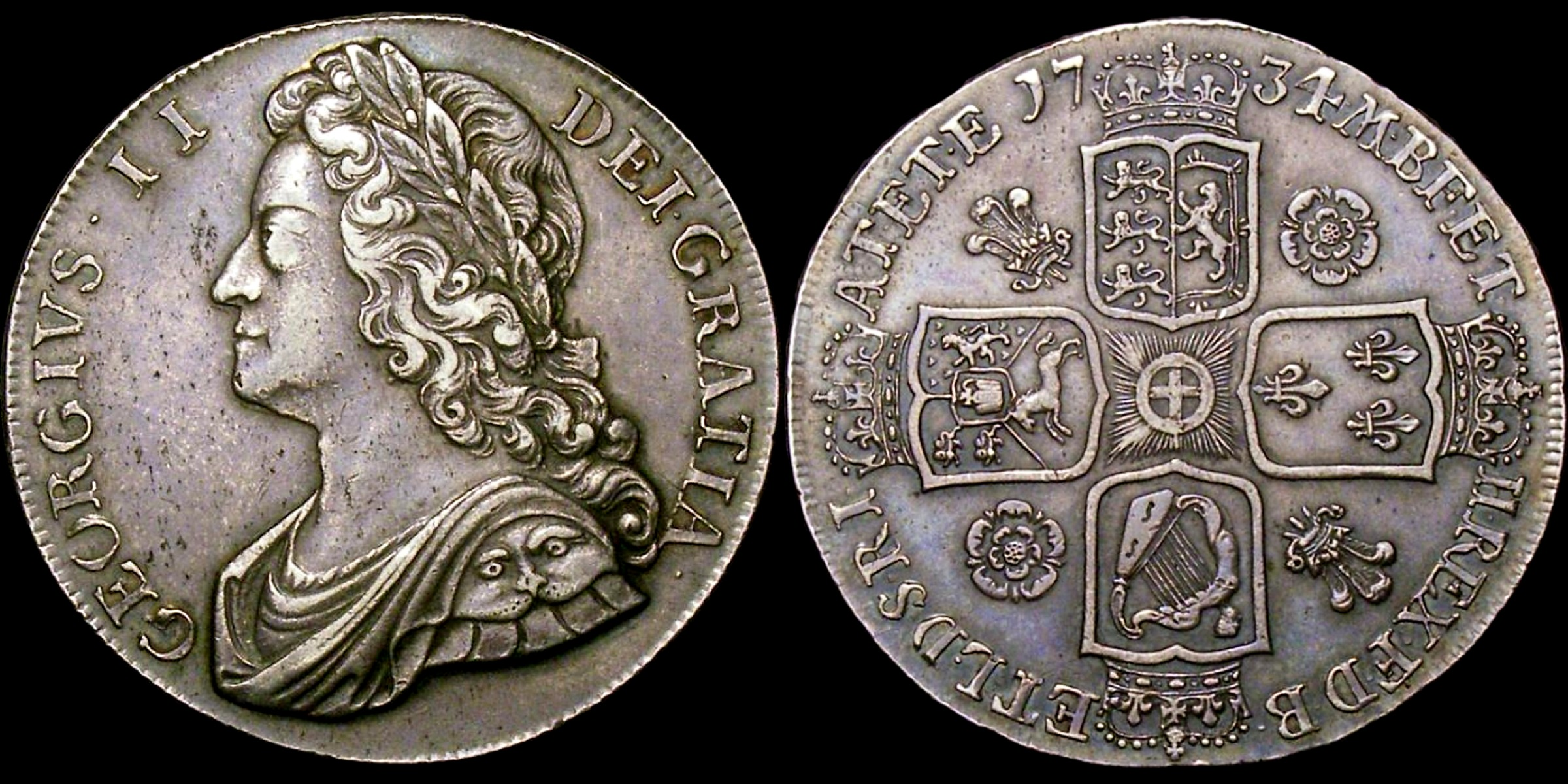
1734 Crown Roses and Plumes
S. 3686 Bull 1662 ESC 119 (rare)
Slabbed and graded LCGS 60 (EF)
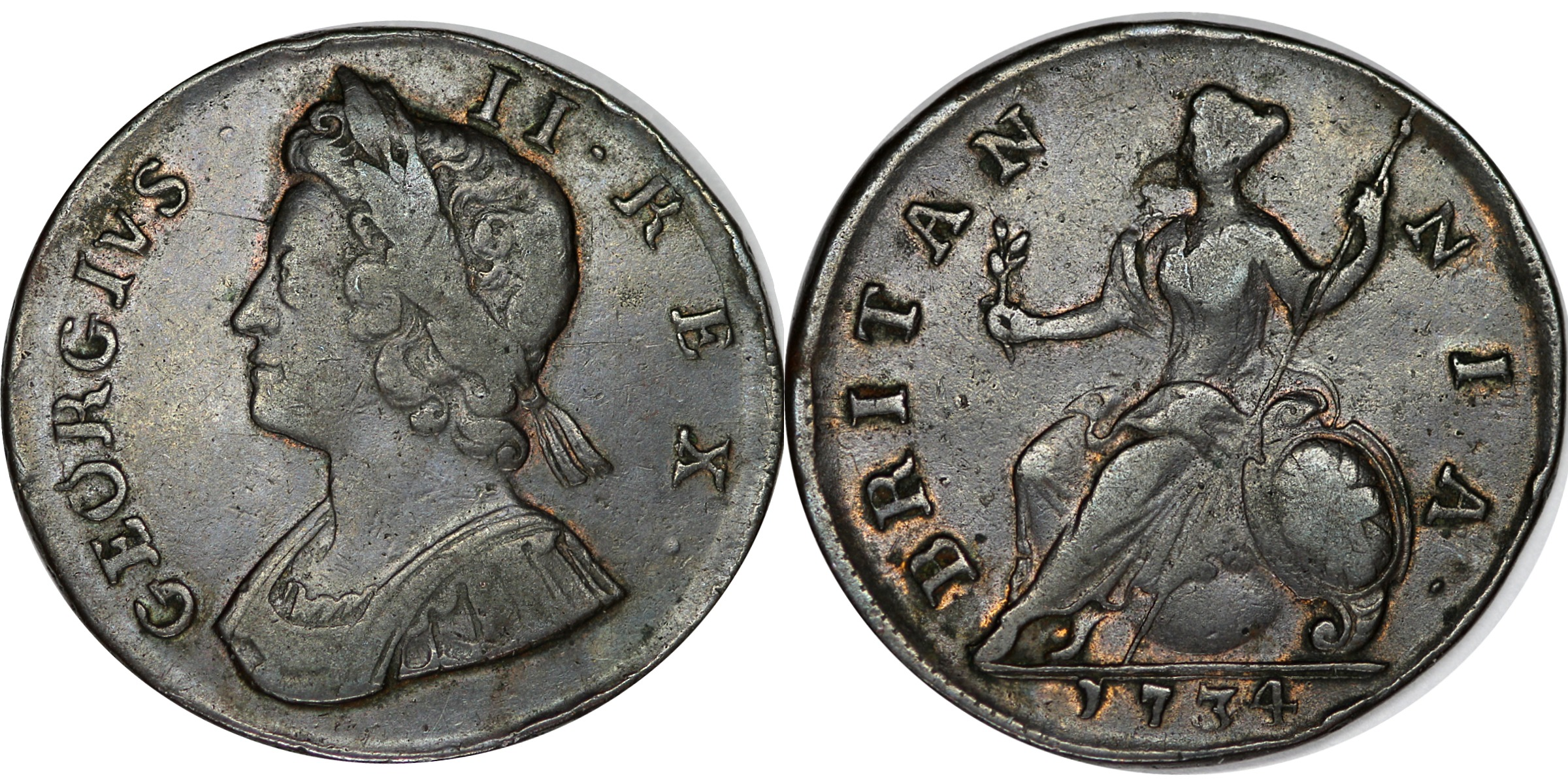
1734 Halfpence
S. 3717


1735 Halfcrown Roses and Plumes OCTAVO (for sale)
S, 3692 Bull 1677 ESC 598 (Scarce)
Provenance
Bt Spink eAuction 22/03/2022 Lot 817
Ex Glendining October 1974 Lot 131
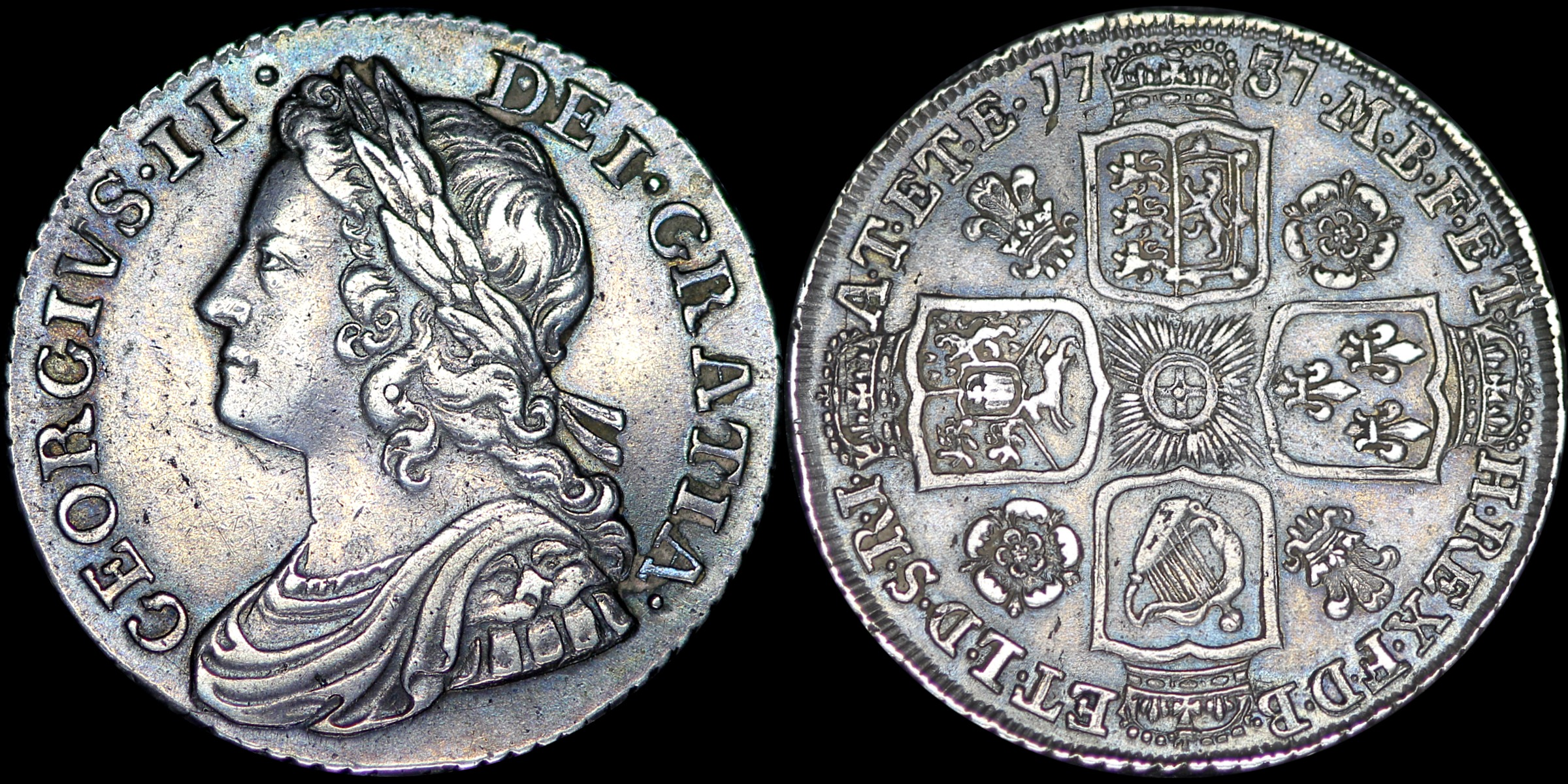
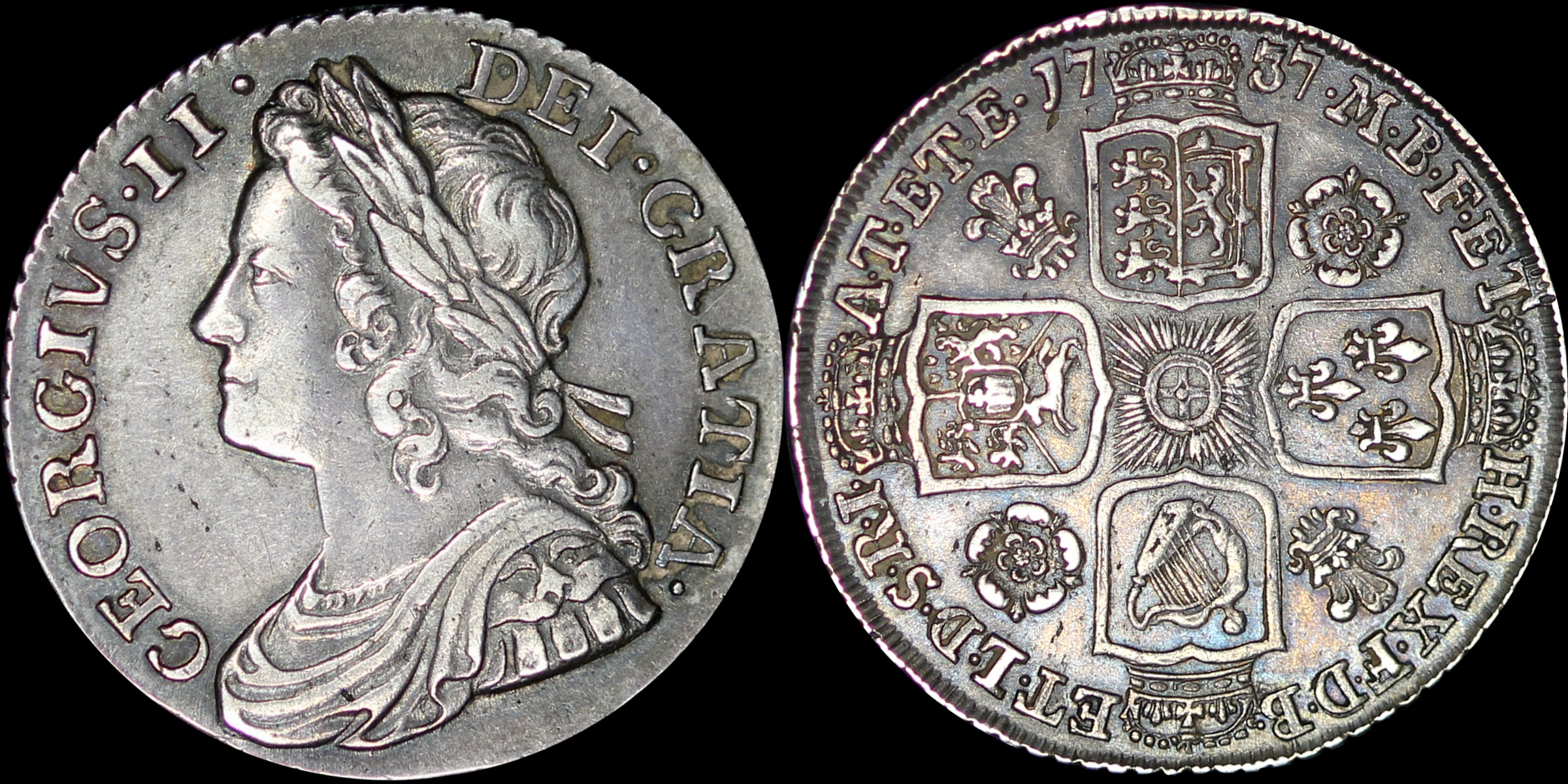
1737 Shilling Roses and Plumes
Recut 3?
S. 3700 Bull 1711 ESC 1200


1739 Halfcrown Roses DVODECIMO (sold PS)
S. 3693 Bull 1679 ESC 600
ex DNW Auction January 2020 Lot 263
Slabbed and graded LCGS 70 (AUNC)


1739 Shilling Roses (sold)
S. 3701 Bull 1716 ESC 1201
ex DNW September 2016 lot 1233
Slabbed and graded LCGS 70 (aUNC)

1741 Sixpence Roses (sold)
S. 3708 Bull 1751 ESC 1613
ex Seaby September 1975
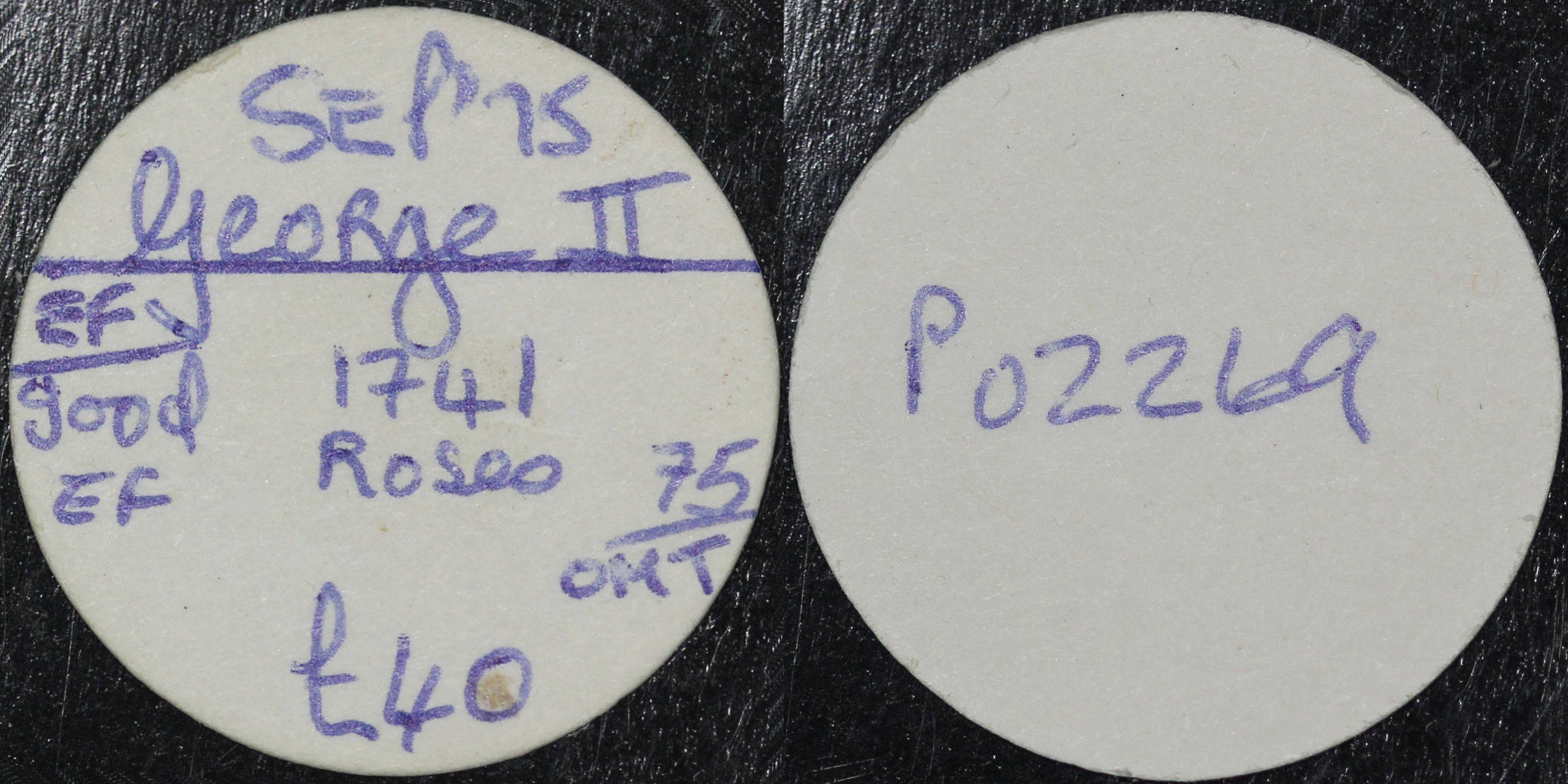
ex DNW February 2020 lot 138

OLD HEAD

1743 Crown Roses (sold)
S. 3688 Bull 1667 ESC 124
Slabbed and graded LCGS 40 (VF)
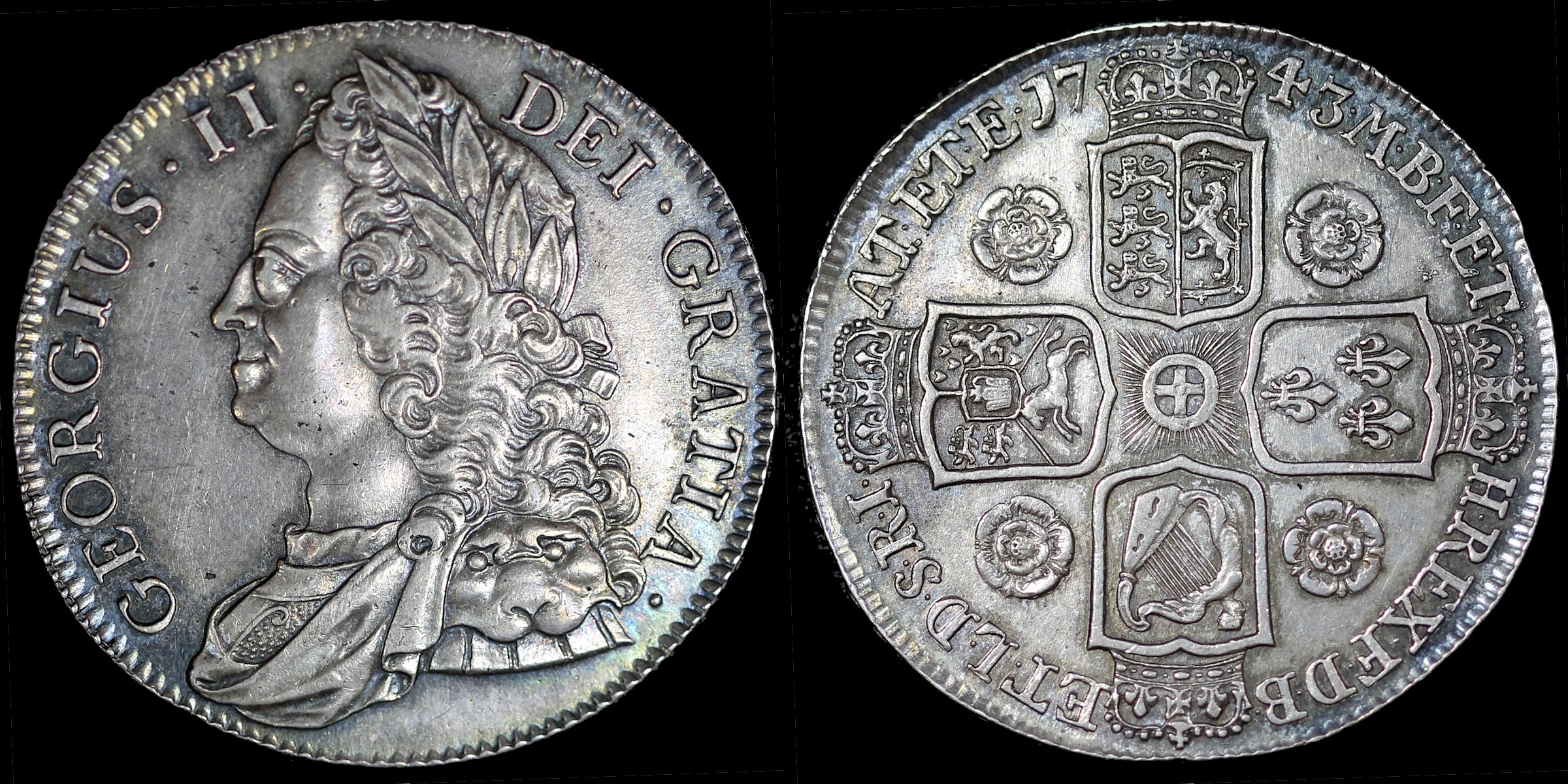
1743 Crown Roses
S. 3688 Bull 1667 ESC 124
Provenance:
Bt Lloyd Bennett Jan 2025

1743 Shilling Roses (SOLD)
S. 3702 Bull 1720 ESC 1203

1743 Sixpence Roses
S. 3709 Bull 1752 ESC 1614
ex DNW February 2020 lot 139


1745 Halfcrown 5 over 5 (sold PS)
S. 3694 ESC 1686 ESC 604 R2 (very rare)
Slabbed and graded LCGS 60 (EF)
LIMA Coinage
In the 1730’s, British mariners were falling victim to abusive ship searches by Spanish coastguards around the West Indies.
One such sailor was Robert Jenkins. During a search of his ship, Rebecca, Spanish officers badly beat Jenkins and cut off his ear. He went before a House of Commons committee to report the incident. That, along with the other mounting complaints about Spanish treatment, gave Prime Minister Sir Robert Walpole reason to declare war on the Spanish Empire in 1739.
This war became known as the War of Jenkins’ Ear and is where Lima coins find their origin.
In 1740, Admiral George Anson and his squadron of ships headed south across the Atlantic Ocean, on a mission to capture Spanish possessions in South America. Along the way, they successfully managed to fend off the Spanish ships that were sent to block them, but when they reached Cape Horn, their situation got worse.
The southernmost point of South America, Cape Horn acts as a gateway from the Atlantic into the Pacific Ocean and is a famously treacherous route. Some of the squadron’s ships were forced to turn around, while some managed to get round Cape Horn successfully. The ones that did, however, lost contact with each other in the effort of the passage.
As they sailed along the Pacific side of South America, however, their luck started to change. They managed to take the Peruvian town of Paita and to capture treasure from a number of Spanish vessels worth over £30,000.
These successes didn’t stop the deterioration of Anson’s crew, however. Throughout the mission, many of the squadron became riddled with diseases, like scurvy and dysentery. They lost many of their ships too, both those that had sailed from England and those they’d captured along the way.
The poor state of the squadron meant Anson was almost ready to start the journey back to England. But the Admiral made the decision to make one last try at seizing more treasure, this time from a Spanish Galleon, a treasure ship that only set sail a few times a year. The crew spent months at sea preparing for the attack and practicing their gunnery skills, until they finally got the chance to launch their attack. After Anson’s crew ravaged the boat with cannonballs and gunshots, the Spanish Galleon surrendered.
Despite losing a huge number of crew members and many ships along the way, when Anson and his remaining crew members finally returned to England in 1744, they brought with them over £500,000 worth of treasure captured from the galleon.
When Anson returned to England, it was decided that the captured silver would be turned into British coins. It was carried to the Royal Mint by many, many wagons, much to the delight of onlookers. The seized coins bore the word ‘Lima’, the name of the Peruvian capital city where the metal for the coins was originally sourced. To mirror this, and to celebrate the capture of the silver, ‘Lima’ was struck into King George II’s silver issues of 1745 and 1746, underneath his portrait.
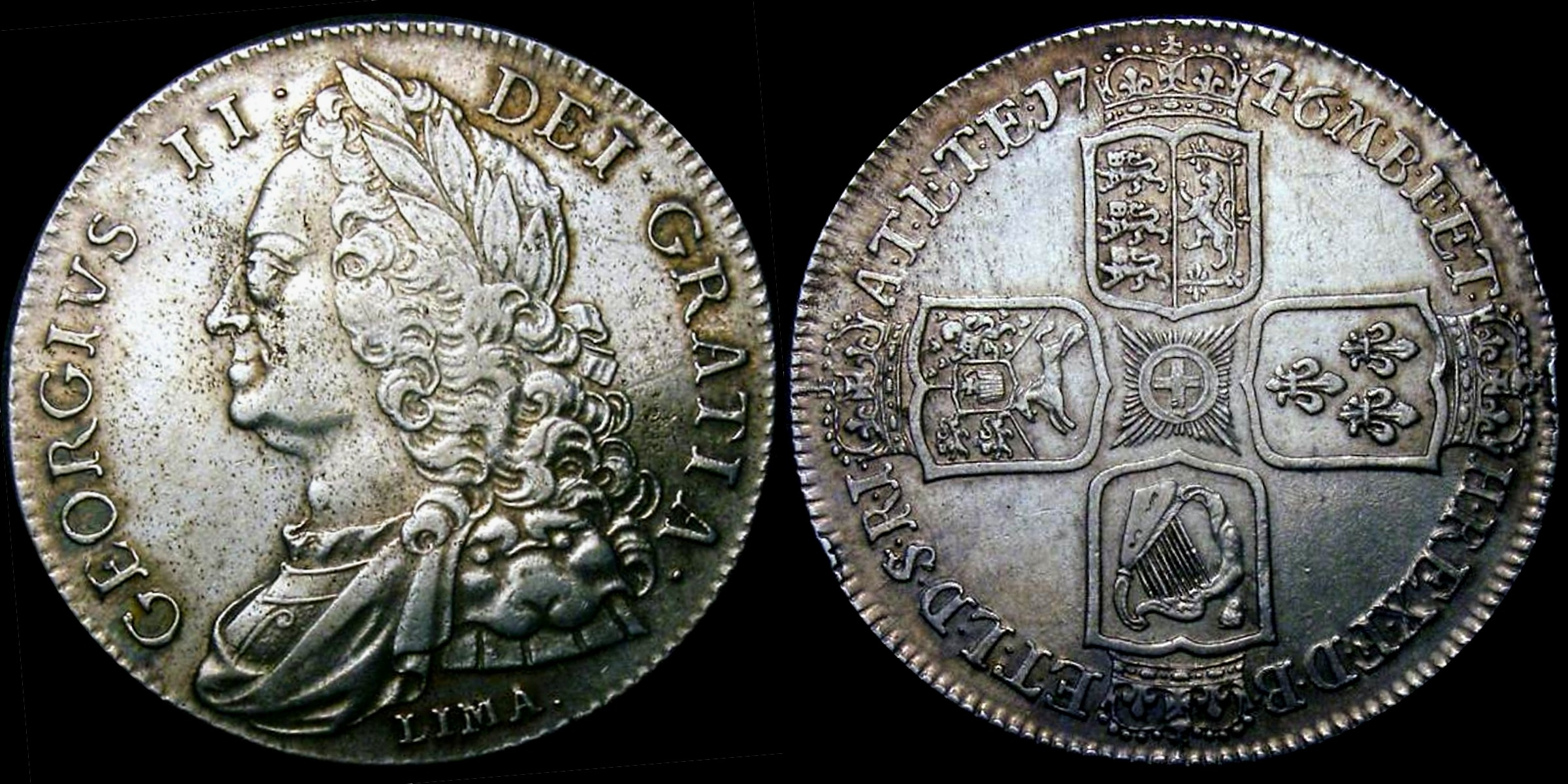
1746 Crown LIMA
S. 3689 Bull 1668 ESC 125
Slabbed and graded LCGS 55 (NEF)

1746 Halfcrown LIMA (sold)
S. 3695A Bull 1688 ESC 606
Slabbed and graded LCGS 70 (aUNC)
Provenance:
Bt SW Coins via Catawiki Auctions February 2016
Ex Spink December 2014 Lot 655 (£420 hammer)
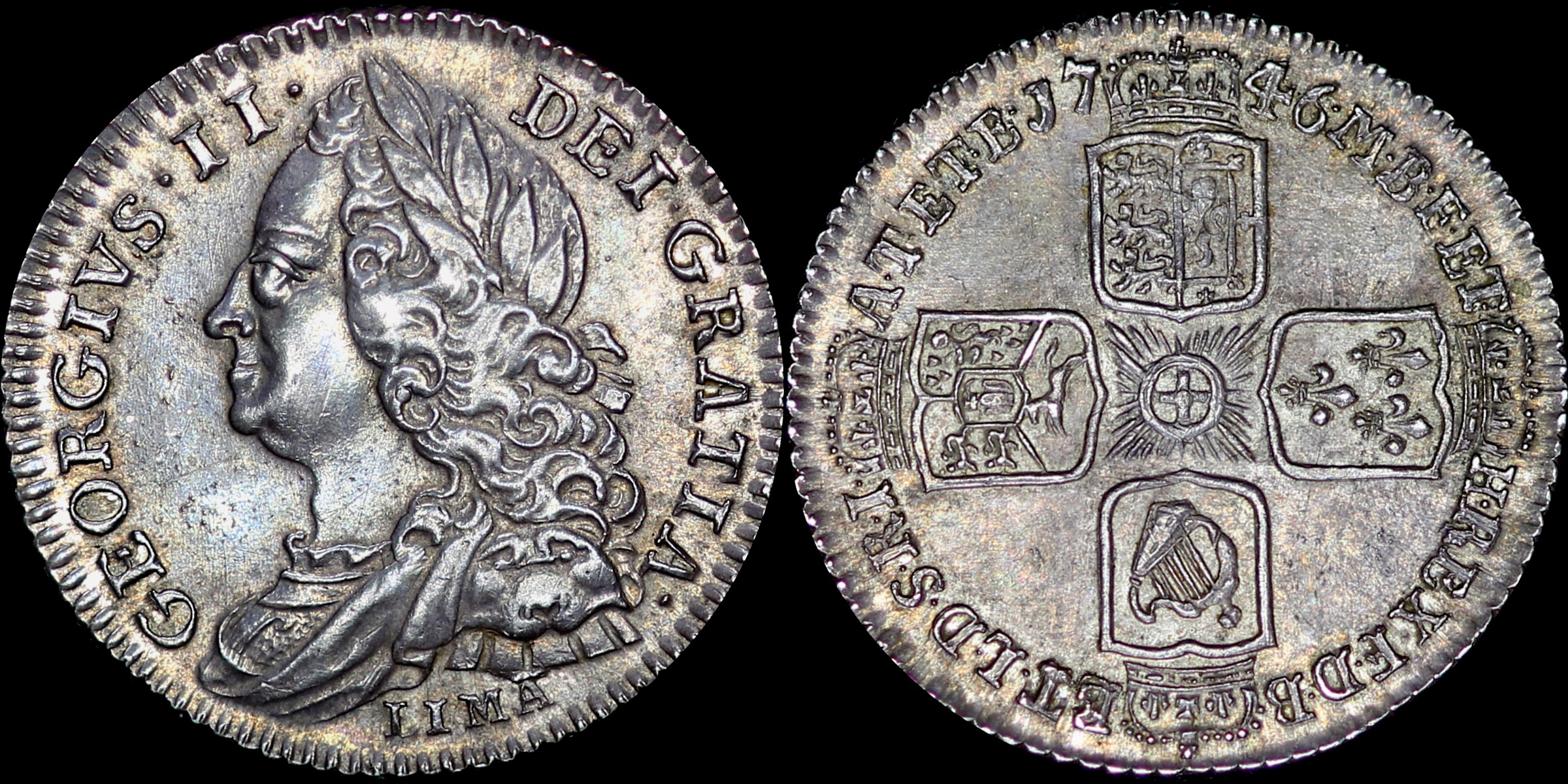
1746 Sixpence LIMA (sold)
S. 3710A Bull 1757 ESC 1618

1746 Sixpence LIMA (sold)
S. 3710A Bull 1757 ESC 1618


1750 Crown VICESIMO QVARTO
S. 3690 Bull 1670 ESC 127 (scarce)
Provenance:
Bt Mark Rasmussen March 2023
Ex. J.E. collection


1750 Shilling, wide O in date and 50 over 47 (sold)
S. 3704 Bull 1732 ESC 1211 (scarce)

1754 Farthing
S. 3722

1758 Sixpence (sold)
S. 3711 Bull 1763 ESC 1623

1758 Shilling (for sale)
S. 3704 Bull 1734 ESC 1213
H over lower H on reverse

Slabbed and graded LCGS 80 (Choice UNC)
 My Coin Collection